
Article
Reports say Serbia's president is swapping to prime minister to stay in power
The maneuver would let Aleksandar Vucic legally extend 12 years of dominance without amending the constitution, but as of 28 September no resignation or 25 October election date had appeared in Serbia's Official Gazette or electoral calendar.


What happenedSerbian President Aleksandar Vucic was reported on 27 September to have resigned to lead his party in a snap parliamentary election reported for 25 October, with Speaker Ana Brnabic set to serve as acting president until a presidential vote within 90 days, though no Gazette decree or electoral commission calendar had confirmed the dates as of 28 September.
Why it mattersIt shows how a two-term limit can be sidestepped without amending the constitution and whether elections under long-term dominant-party rule can still produce a change of power — a question closely watched in Brussels and Kosovo.
Still openWhether the resignation and election dates will be formally published, whether the vote will be free and fair enough to allow an opposition breakthrough, and how Serbia's Constitutional Court or the Venice Commission will judge the swap's legitimacy.
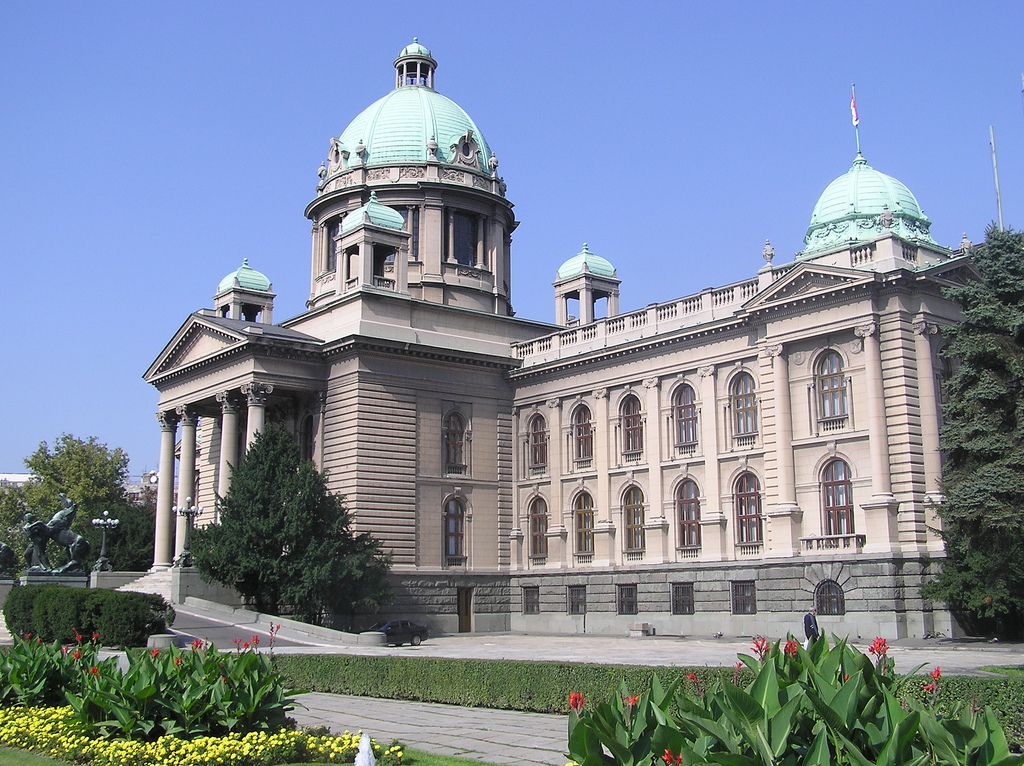
Serbia's president was reported on 27 September to have resigned to run for prime minister — a legal way to stay in power after hitting his term limit.
Aleksandar Vucic — president since 2017 and the country's dominant politician since 2014 — was reported to have stepped down to lead his Serbian Progressive Party (SNS) in a snap parliamentary election reported for 25 October, with parliament Speaker Ana Brnabic designated as likely acting president until a presidential vote due within 90 days, by late December.
From prime minister to president — and back to prime minister candidate. The timeline shows Aleksandar Vučić moving from prime minister to two presidential terms, then toward a reported prime-minister candidacy after resigning on 27 September 2026. The resignation and 25 October snap-election dates remain pending Official Gazette/RIK confirmation. — AI-assisted analytic, built only from real cited or sourced data. Source: The Frontier Post (republishing AFP), Wikipedia, Constitute Project. As of 2026-09-28.
That calendar is still reported, not confirmed. As of 28 September it rested on a single wire report republished via the Frontier Post and a Wikipedia update. No resignation decree had appeared in Serbia's Official Gazette, where laws and appointments take legal effect, no statement on the Presidency website, and no calendar from the Republic Electoral Commission, which runs elections. No reaction had appeared on the primary sites of the EU's enlargement department, the EU's foreign service, the US Embassy in Belgrade, or Kosovo's government either. Until the Gazette publishes, the dates and the vacancy remain reported.
Why prime minister is not a step down
Serbia is a parliamentary republic with two executives. The president, directly elected for five years and limited to two terms under Article 116 of the 2006 Constitution, is head of state. The prime minister heads the Government, which the constitution calls the holder of executive power.
That split is why the reported move matters. Vucic was prime minister from 2014 to 2017, then president from 2017, winning in the first round in 2017 and 2022. His second term would otherwise end in May 2027, and Article 116 bars a third. The Law on Government sets no term limit for prime minister and no bar on a former two-term president taking the job; the incompatibility ends on resignation. If SNS wins a majority and the National Assembly elects him, Vucic would shift to direct control of government without amending the constitution.
The comparison often made to Russia's Putin-Medvedev rotation is useful only as an illustration of a dual executive where only one office is term-limited. Whether the swap violates the spirit of the constitution is disputed, not settled. No decision by Serbia's Constitutional Court and no opinion by the Venice Commission — the Council of Europe's constitutional advisory body — on this role-swap had appeared as of 28 September. "Legally permitted on the letter" is accurate; "democratically legitimate" remains contested.
The succession rule is confirmed even if the vacancy is not. Under Article 120, the Speaker serves as acting president for at most three months if the office is vacant. A secondary report described Vucic handing Brnabic the presidential seal on 28 September, but whether she actually serves depends on formal confirmation in the Gazette. The parliamentary arithmetic is fixed: 250 seats, 126 for a majority. No list composition beyond Vucic heading the SNS list had been detailed, and no presidential candidates for December had been nominated in the sources available. The parliamentary vote was reported for 25 October 2026, brought forward from a deadline of December 2027.
Can street protests become votes?
The October test is whether a protest movement can overcome a dominant party's structural advantage.
How dominant the ruling party has been going into the snap election. SNS-led electoral lists won 73 to 188 seats across Serbia’s 2012–2023 parliamentary elections, clearing the 126-seat majority line in four of six votes; the 2023 list won 129 seats, alongside 18 SPS seats and 65 for Serbia Against Violence. The 105-seat SNS figure is the party-level context requested for 2023, while the bars use electoral-list results. Publisher: Statistical Office of the Republic of Serbia — AI-assisted analytic, built only from real cited or sourced data. Source: Wikipedia, The Frontier Post (republishing AFP). As of 2026-09-28. Partly unconfirmed: 1 of 9 data points could not be confirmed against a source.
SNS has governed since 2012 and won a parliamentary majority in 2023, while its junior partner and the main opposition coalition trailed far behind. International monitors rank Serbia as a flawed democracy to electoral autocracy, citing pressure on media, opposition and civil society under SNS dominance. Allegations of fraud in December 2023 triggered protests at the time.
The opposition has reconfigured around the student-led anti-corruption movement born from the Novi Sad railway station canopy collapse in November 2024, which killed 16 people and became a symbol of corruption. The disaster forced resignations of ministers and later the prime minister, replaced in April 2025 by Djuro Macut, nominated by Vucic. Student demands moved from disclosure of reconstruction documents to calls for snap elections. Through 2025 and into May 2026, demonstrations of 100,000 to 325,000 people were reported.
That movement is now an electoral actor as the Student List, also called Students Win, alongside the pro-Western alliance European Serbia. Whether street mobilisation translates into votes is unproven. No independent 2026 polling or seat projections were available, and 2026 electoral law changes said to address irregularities were not detailed in the sources.
On coverage, media scholars cited in a secondary report allege structural bias on national televisions despite rules requiring clearly marked electoral programming. That remains an allegation via a single outlet, with no decision by REM — Serbia's broadcast regulator — or law text available to confirm a finding.
Two stories about the same resignation
The same reported resignation is told as two different stories, and neither has been adjudicated by a court.
The SNS and government story is honorable continuity that is legal and stabilizing. In front of the Presidency on 27 September, Vucic said he had served "faithfully, honorably and honestly" through two mandates, citing preserving peace and stability through Covid, the war in Ukraine and migrations, and maintaining Serbia as the "only country in Europe with its own political stance on Ukraine" despite pressures. SNS president Milos Vucevic framed the 25 October list as "Aleksandar Vucic — United Serbia," saying it is "not Serbia of one party or one people, it is Serbia of all citizens."
The opposition and activist story is abuse of power and fabricated justice, focused on 49 pardons Vucic issued the same day, including 12 Novi Sad activists charged with attempting to overthrow the constitutional order. The liberal opposition party Movement of Free Citizens (PSG) called the pardons an attempt to exit a "politically mounted process" used for media lynching, noting six people spent seven months in detention without a verdict on the basis of Security Intelligence Agency material whose legality the defence contested. The activists themselves rejected the pardon: the student group STAV said after more than 500 days in exile and more than seven months in detention in a "fabricated procedure constructed by authoritarian arbitrariness," the same circle that devised it now pardoned them — "We do not accept mercy... We got freedom that belonged to us from start" — while defendant Srdan Djuric said "I do not seek mercy, nor pardon, nor abolition, but justice and right to fair trial," calling the pardon an attempt for SNS actors to avoid justice. Both framings are grounded in their sources, but neither has been ruled on by the Constitutional Court or the Venice Commission. Absence of a ruling is not endorsement or condemnation.
What Brussels and Kosovo are watching
Beyond Serbia, continuity or change matters for the European Union, which conditions Serbia's EU accession on rule-of-law reforms, and for Kosovo, whose normalization of relations with Serbia Brussels also conditions on progress.
What remains to be established is basic: whether the resignation has been formally accepted and published in the Gazette and whether the Assembly has been dissolved with an official calendar will determine if 25 October and late December are real dates or reported ones. Who SNS nominates for president and what independent polls show about whether the Student List and European Serbia can together deny SNS 126 seats will determine if the role-swap is a formality or a contest.
Source recordSources / claims / limits
How this piece is framed: A constitutionally permitted role-swap that tests whether elections can still check dominant-party rule — and what continuity means for Serbia's EU/Kosovo balancing act
Charts & tables — AI-assisted; provenance on each line
- Vucic's offices and the two-term limit that forces the swap — from claims clm_6ba93053e8, clm_d7a52ec977, clm_05b7a878f7, clm_644d3667a3, clm_6b8dd68d6f, clm_3f55dc735c, clm_b8bb8e8cae, clm_40c84c41cc, clm_c72875e8d0, clm_f06d3eb948 · as of 2026-09-28
- SNS parliamentary dominance, 2012-2023 — sourced for this figure · as of 2026-09-28 · ⚠ Partly unconfirmed: 1 of 9 data points could not be confirmed against a source.
Sources
- (primary) RTS Politika section — https://www.rts.rs/lat/vesti/politika/ · read in full · captured 2026-09-28
- (primary) DG Enlargement Serbia country page — European Commission — https://neighbourhood-enlargement.ec.europa.eu/enlargement-policy/serbia_en · read in full · captured 2026-09-27
- (primary) Zakon o Vladi — Paragraf — https://www.paragraf.rs/propisi/zakon_o_vladi.html · read in full · captured 2026-09-27
- (primary) Zakon o izboru narodnih poslanika — Paragraf — https://www.paragraf.rs/propisi/zakon_o_izboru_narodnih_poslanika.html · read in full · captured 2026-09-27
- (primary) Serbia 2006 Constitution — Constitute Project — https://www.constituteproject.org/constitution/Serbia_2006 · read in full · captured 2026-09-27
- (primary) Venice Commission Serbia country page — https://www.coe.int/en/web/venice-commission/serbia · read in full · captured 2026-09-28
- (primary) Zakon o predsedniku Republike — Paragraf — https://www.paragraf.rs/propisi/zakon_o_predsedniku_republike.html · read in full · captured 2026-09-27
- (primary) Vucic: Hvala hrabrim ljudima koji su se suprotstavili rušenju Srbije — SNS — https://www.sns.org.rs/novosti/vesti/vucic-hvala-hrabrim-ljudima-koji-su-se-suprotstavili-rusenju-srbije · read in full · captured 2026-09-28
- (primary) U.S. Embassy in Serbia Homepage — U.S. Department of State — https://rs.usembassy.gov/ · read in full · captured 2026-09-28
- (primary) Ustav Republike Srbije (consolidated Serbian text) — Paragraf — https://www.paragraf.rs/propisi/ustav_republike_srbije.html · read in full · captured 2026-09-27
- (primary) Serbia 2024 Report SWD(2024) 695 final — European Commission — https://enlargement.ec.europa.eu/document/download/3c8c2d7f-bff7-44eb-b868-414730cc5902_en?filename=Serbia%20Report%202024.pdf · read in full · captured 2026-09-27
- (primary) DG Enlargement News — https://neighbourhood-enlargement.ec.europa.eu/news_en · read in full · captured 2026-09-28
- (primary) National Assembly of the Republic of Serbia homepage — https://www.parlament.gov.rs/national-assembly.467.html · read in full · captured 2026-09-27
- (primary) Vucevic: Srbi i Bošnjaci zajedno - to je Ujedinjena Srbija — SNS — https://www.sns.org.rs/novosti/vesti/vucevic-srbi-bosnjaci-zajedno-ujedinjena-srbija · read in full · captured 2026-09-28
- (primary) Serbia's Constitution of 2006 (English PDF) — Constitute Project — https://www.constituteproject.org/constitution/Serbia_2006.pdf · read in full · captured 2026-09-27
- (secondary) Grupa STAV Vučiću: Abolicijom montiranog postupka nećete dobiti još jedan politički poen — N1 Info — https://n1info.rs/vesti/grupa-stav-vucicu-abolicijom-montiranog-postupka-necete-dobiti-jos-jedan-politicki-poen/ · read in full · captured 2026-09-28
- (secondary) Serbian President Aleksandar Vucic resigns to run for prime minister in October elections — The Frontier Post (republishing AFP) — https://thefrontierpost.com/serbian-president-aleksandar-vuc · read in full · captured 2026-09-27
- (secondary) PSG: Abolicija novosadskih aktivista Vučićev pokušaj izlaska iz politički montiranog procesa — N1 Info — https://n1info.rs/vesti/psg-abolicija-novosadskih-aktivista-vucicev-pokusaj-izlaska-iz-politicki-montiranog-procesa/ · read in full · captured 2026-09-28
- (secondary) Vučić predsedničku dužnost predao Ani Brnabić — N1 Info — https://n1info.rs/vesti/vucic-predsednicku-duznost-predao-ani-brnabic/ · read in full · captured 2026-09-28
- (secondary) Kampanja u medijima: Iako postoje jasna pravila o zastupljenosti, za listu koju predvodi Vučić - posebni uslovi — N1 Info — https://n1info.rs/vesti/studentska-lista-sns-predizborna-kampanja-izbori-2026/ · read in full · captured 2026-09-28
- (secondary) Đurić o Vučićevom pomilovanju: Ne tražim milost, već pravdu — N1 Info — https://n1info.rs/vesti/djuric-o-vucicevom-pomilovanju-ne-trazim-milost-vec-pravdu/ · read in full · captured 2026-09-28
- (tertiary) Constitution of Serbia — Wikipedia — https://en.wikipedia.org/wiki/Constitution_of_Serbia · read in full · captured 2026-09-27
- (tertiary) Politics of Serbia — Wikipedia — https://en.wikipedia.org/wiki/Politics_of_Serbia · read in full · captured 2026-09-27
- (tertiary) Accession of Serbia to the European Union — Wikipedia — https://en.wikipedia.org/wiki/Serbia_and_the_European_Union · read in full · captured 2026-09-27
- (tertiary) President of Serbia — Wikipedia — https://en.wikipedia.org/wiki/President_of_Serbia · read in full · captured 2026-09-27
- (tertiary) Aleksandar Vucic — Wikipedia — https://en.wikipedia.org/wiki/Aleksandar_Vu%C4%8Di%C4%87 · read in full · captured 2026-09-27
- (tertiary) Serbian Progressive Party — Wikipedia — https://en.wikipedia.org/wiki/Serbian_Progressive_Party · read in full · captured 2026-09-27
- (tertiary) 2026 Serbian parliamentary election — Wikipedia — https://en.wikipedia.org/wiki/2026_Serbian_parliamentary_election · read in full · captured 2026-09-27
- (tertiary) Prime Minister of Serbia — Wikipedia — https://en.wikipedia.org/wiki/Prime_Minister_of_Serbia · read in full · captured 2026-09-27
- (primary) Venice Commission About — https://www.coe.int/en/web/venice-commission/ · full text not obtained — used its summary
Claims, and how far we tracked each down
- [unconfirmed] No primary source (Serbian Presidency saopstenje, Official Gazette decree, National Assembly dissolution decision, or RIK calendar) for 27 September 2026 resignation or 25 October 2026 snap election was retrievable; verification requires Official Gazette publication. · read in full (as of 2026-09-27)
- [contested] Constitutional legality vs spirit-of-constitution framing is disputed: while Constitution Art 116 (two presidential terms) and Art 124-128/Law on Government (no PM term limit, no bar on former president becoming PM) make role-swap formally permitted if SNS wins majority and Assembly elects Vučić (existing clm_f06d3eb948, clm_c72875e8d0), opposition/activist statements frame it as authoritarian prolongation/abuse of power and 'fabricated' use of institutions, and media scholars frame it as entrenching dominant-party advantage; no Constitutional Court decision or Venice Commission assessment located to adjudicate spirit-vs-letter debate, leaving 'legally permitted' accurate on letter but contested on democratic legitimacy. · read in full (as of 2026-09-28)
- [confirmed] No official EU, EEAS, US or Kosovo government reaction to resignation was retrievable on primary sites as of 28.09.2026: DG Enlargement news feed (2420 items) showed no Serbia resignation statement; EEAS Serbia page returned 404; U.S. Embassy Belgrade homepage showed only Chargé d'Affaires Alexander Titolo mission statement with no press release on resignation; RTS politics feed listed only domestic handover coverage. Gap noted in profile ('No official EU, US, or regional government reactions found') remains unfilled by primary sources at this snapshot. · read in full (as of 2026-09-28)
- [likely] Serbian President Aleksandar Vucic resigned on Sunday 27 September 2026 ahead of snap parliamentary elections scheduled for 25 October 2026 · read in full (as of 2026-09-27)
- [likely] Vucic resigned in order to run as prime ministerial candidate if his Serbian Progressive Party (SNS) wins the October vote · read in full (as of 2026-09-27)
- [confirmed] Vucic's second presidential term would otherwise end in May 2027 and he is barred by the Constitution from seeking a third term · read in full (as of 2026-09-27)
- [confirmed] Under Serbia's Constitution the president is directly elected for a five-year term with a maximum of two terms · read in full (as of 2026-09-27)
- [confirmed] Serbia's Constitution establishes a unitary parliamentary constitutional republic where the president is head of state and the prime minister is head of government who directs the Government · read in full (as of 2026-09-27)
- [confirmed] Executive power is exercised jointly by the president and the Government, but the Government headed by the prime minister is the chief executive body; the president's formal powers are limited (veto, dissolving parliament, nominating PM, appointing ambassadors, pardons) though de facto influence has been greater under Vucic · read in full (as of 2026-09-27)
- [confirmed] Upon presidential vacancy, the President of the National Assembly serves as acting president until a new president is elected within three months; presidential election must be completed within 90 days with campaign lasting 30-60 days · read in full (as of 2026-09-27)
- [likely] Outgoing parliament Speaker Ana Brnabic will serve as interim (acting) president after Vucic's resignation · read in full (as of 2026-09-27)
- [confirmed] Snap parliamentary elections on 25 October 2026 will elect all 250 members of the National Assembly by closed-list proportional representation with 3% threshold (waived for minorities) and d'Hondt allocation; 126 seats needed for majority · read in full (as of 2026-09-27)
- [confirmed] National Assembly has 250 MPs elected for four years in Serbia as a single constituency by closed-list proportional representation with mandates allocated by highest quotient system (d'Hondt) by list order. · read in full (as of 2026-09-27)
- [confirmed] Under Serbia's 2006 Constitution Article 116, the President is directly elected for a five-year term and no one shall be elected President more than twice irrespective of term length. · read in full (as of 2026-09-27)
- [confirmed] Constitution Article 112 defines the President as head of state expressing state unity; Article 123 defines the Government as holder of executive power which establishes and pursues policy; Articles 124-128 define the Prime Minister who directs the Government. · read in full (as of 2026-09-27)
- [confirmed] If the President resigns, is dismissed or prevented, the President of the National Assembly replaces him for at most three months (Constitution Art 120; Law on President). · read in full (as of 2026-09-27)
- [confirmed] The Constitution (Art 124-128) and Law on Government contain no term limit for Prime Minister and no bar on a former two-term President being nominated and elected Prime Minister by the National Assembly; incompatibility (cannot perform another public function) applies only while President. · read in full (as of 2026-09-27)
- [confirmed] The President may submit a written resignation to the President of the National Assembly; mandate ends when resignation arrives in the National Assembly; President must inform the public. · read in full (as of 2026-09-27)
- [confirmed] President dissolves the National Assembly on reasoned Government proposal (within 72 hours) or as constitutional duty if no Government elected within 90 days of constitution or 30 days after mandate ends, and with dissolution decree calls parliamentary elections. · read in full (as of 2026-09-27)
- [likely] Vucic stated the first round of presidential elections will be held by end of December 2026 · read in full (as of 2026-09-27)
- [confirmed] The October 2026 election was called early by President Vucic in September 2026; it was originally scheduled by December 2027 · read in full (as of 2026-09-27)
- [confirmed] SNS has been the ruling party since 2012, governing initially with Socialist Party of Serbia (SPS); it won a parliamentary majority in 2023 and holds 105 of 250 seats in the outgoing assembly · read in full (as of 2026-09-27)
- [confirmed] Serbia has experienced student-led anti-corruption protests since November 2024 triggered by the Novi Sad railway station canopy collapse, with major demonstrations of 100,000-325,000 participants and ongoing protests through May 2026 · read in full (as of 2026-09-27)
- [confirmed] International democracy assessments rate Serbia as flawed democracy / electoral autocracy / partly free with democratic backsliding, citing pressure on media, opposition and civil society under SNS rule · read in full (as of 2026-09-27)
- [likely] SNS and allies will face Students Win (Student List, ballot holder Ilija Srdanovic) and European Serbia alliance of pro-Western opposition parties, plus other parties yet to nominate presidential candidates · read in full (as of 2026-09-27)
- [confirmed] As of 2024 Commission Report, since January 2014, 22 of 35 chapters opened including all of Cluster 1 (Fundamentals) and Cluster 4 (Green agenda), two chapters provisionally closed (25 and 26). · read in full (as of 2026-09-27)
- [confirmed] Commission recommendations that Serbia fulfilled opening benchmarks for Cluster 3 (Competitiveness and inclusive growth) and is technically ready remain valid; overall pace depends on rule-of-law reforms (Ch 23/24) and Kosovo normalization. · read in full (as of 2026-09-27)
- [confirmed] Under revised enlargement methodology Serbia accepted June 2021, fundamentals first applies; Serbia adopted Reform Agenda under Reform and Growth Facility on 3 October 2024 covering business environment, green/digital, human capital, and fundamentals/rule of law. · read in full (as of 2026-09-27)
- [confirmed] Constitution Preamble and Article 8 define Kosovo and Metohija as integral part of Serbia with substantial autonomy, creating constitutional obligations for all state bodies to uphold state interests there. · read in full (as of 2026-09-27)
- [confirmed] SNS/Vučić justification frames resignation as honorable completion of two presidential terms: Vučić told supporters in front of Presidency 27.09.2026 he 'served faithfully, honorably and honestly' two mandates (2017 and 2022 first-round victories), thanked 'brave people who opposed the destruction of Serbia,' cited preserving peace and stability through Covid, Ukraine-Russia war and migrations, growing economy, 14 years stable dinar, defending traditional and democratic values, refusing to extradite Serbs to Hague Tribunal, and maintaining Serbia as 'only country in Europe with its own political stance on Ukraine' despite pressures; he expressed 'joy looking to future' with 'many more victories' and Serbia becoming strongest growth economy in Europe next year. · read in full (as of 2026-09-28)
- [confirmed] SNS frames the October 25 list as 'Aleksandar Vučić – Ujedinjena Srbija' as inclusive answer to divisions: SNS president Miloš Vučević on 27.09.2026 in Sjenica said 'United Serbia is not Serbia of one party or one people, it is Serbia of all citizens,' where Serbs and Bosniaks 'live together, not next to each other,' celebrating Christmas, Easter, Ramadan and Kurban Bayram together; he called it response to attempts to divide citizens 'on every basis' and to student blockades that left people not listening to each other, citing incident in Kula as danger of hatred, and urged voters to decide on families/lives and who guarantees peace, stability and new roads/school hall. · read in full (as of 2026-09-28)
- [confirmed] Acting president Ana Brnabić's handover narrative praises Vučić: on 28.09.2026 Vučić handed presidential seal, pardon documents and other files to Brnabić with bouquet of pink roses; Brnabić said 'I think never before have we had such a president, never again will Serbia have a president so dedicated and who put everything aside for Serbia. It is an honor to receive this duty from such a man and to guard it until the people elect a new president,' adding she 'fought against seals all her life and now has the most important seal in Serbia.' · read in full (as of 2026-09-28)
- [confirmed] Opposition/activist counter-frame rejects pardon as political maneuver: Movement of Free Citizens (PSG) said Vučić's 27.09.2026 decision to abolish 12 Novi Sad activists (part of 49 pardons) is attempt to exit a 'politically mounted process' used for media lynching, noting 6 people spent 7 months in detention without verdict, that secret recording from PSG premises was first aired on regime TVs 13 March 2025 then delivered to prosecution next day, arrests based on BIA material whose legality defense contested; PSG legal chief Aleksandar Petrović said 'abolition does not erase how procedure was initiated... regime prevented court from stating key evidence was obtained illegally and acquitting.' · read in full (as of 2026-09-28)
- [confirmed] Novi Sad activists (STAV) reject mercy and frame abolition as proof of fabrication: STAV activists said after 500+ days exile and 7+ months detention in 'fabricated procedure constructed by authoritarian arbitrariness,' the same circle that devised it now abolished them, proving it was 'exclusively fabricated to silence activists and remove them from streets - and streets are still full'; they said 'We do not accept mercy, you did not give it to us. We got freedom that belonged to us from start and was violently taken,' accused authorities of using last instance of procedure in campaign run 'directly from Presidency' to earn 'few small political points' and create false symmetry equating them with violent actors, and demanded accountability for beatings, detentions, job losses and deaths of 16 fellow citizens. · read in full (as of 2026-09-28)
- [confirmed] Individual defendant Srđan Đurić (PSG/STAV 'Novosadska dvanaestorka' charged with attempt to overthrow constitutional order) said 'I do not seek mercy, nor pardon, nor abolition, but justice and right to fair trial,' calling Vučić's abolition 'shameless attempt for those who should be tried - SNS violent actors and criminals - to avoid justice,' stating 'I refuse that a murderer divides justice to me innocent,' after being detained 10+ times, beaten and targeted. Trial began 24 Nov 2024, six in country and six in exile tried in absentia. · read in full (as of 2026-09-28)
- [likely] Media-fairness dissent alleges structural bias favoring SNS list and violating campaign rules: N1 report citing professor Aleksandra Krstić and publisher Gojko Božović says despite law requiring clearly marked electoral program and ban on functional campaign and covert political content 30 days before vote, national TVs Pink and Prva give Vučić-led list privileged positive coverage both inside and outside electoral block while Student List gets no space except negative campaign; Krstić calls it direct violation lowering personal/professional reputation of Student List figures and presenting authorities 'exclusively in dominant positive way,' while Božović says SNS lacks mobilization for large events and campaigns only through regime media; Krstić expects REM to be in permanent session and decide penalties within 48 hours. · read in full (as of 2026-09-28)
- [confirmed] No Venice Commission opinion on Serbian presidential term-limit role-swap was retrievable as of 28.09.2026: Venice Commission Serbia page lists 20+ opinions (1290/2026, 1283/2026, 1275/2026, 1274/2026 etc.) focused on judicial academy, judiciary/prosecution amendments and 2021 joint opinion on constitutional framework governing democratic institutions (1071/2021), with no entry addressing Art 116 two-term limit evasion via premiership; Commission's role is advisory on constitutional matters (46 CoE members +15). Absence means neither endorsement nor condemnation of maneuver is grounded in Venice Commission source to date. · read in full (as of 2026-09-28)
- [confirmed] Serbia applied for EU membership in 2009, became candidate in 2012, began negotiations in 2014; 22 of 34 acquis chapters opened, 2 of 6 clusters opened, none closed as of 2024-2026; earliest possible entry cited as 2029-2030 · read in full (as of 2026-09-27)
- [confirmed] EU accession progress is conditioned on rule of law reforms (chapters 23/24) and normalization of relations with Kosovo; Cluster 3 opening was postponed in 2024-2026 over rule-of-law concerns including Dutch veto threat · read in full (as of 2026-09-27)
Where we hit a limit / what to double-check
- We did not obtain the full text of Venice Commission About (https://www.coe.int/en/web/venice-commission/); claims resting on it are from its summary — you may be able to reach it directly.